Cognitive development starts long before school
When we think about early intervention for children with cerebral palsy (CP), it's natural to focus on movement. Rolling, reaching, sitting and walking are all important developmental milestones.
But there’s another area of development that deserves just as much attention from the earliest months of life – cognition.
Long before children start school, they are learning how to think, solve problems, pay attention, remember information and make sense of the world around them. These cognitive skills are the building blocks for communication, learning, independence and participation throughout life.
The exciting news? They can be nurtured from infancy through everyday interactions with parents, caregivers and clinicians.
More than learning facts
Cognitive development isn’t about teaching babies colours, numbers or the alphabet. It’s about helping them develop the skills they need to learn.
These include:
- Understanding cause and effect
- Exploring their environment
- Developing flexible thinking
Together, these skills form the foundations of executive functioning – the brain’s ability to plan, organise, focus attention and regulate behaviour.
Like movement and communication, these abilities begin developing long before a child enters the classroom.
Every interaction is an opportunity to learn
Infants learn best through active participation. Every time a baby reaches for a toy, watches a parent’s face, experiments with a new object or anticipates what will happen next, they are strengthening the neural pathways that support thinking and learning.
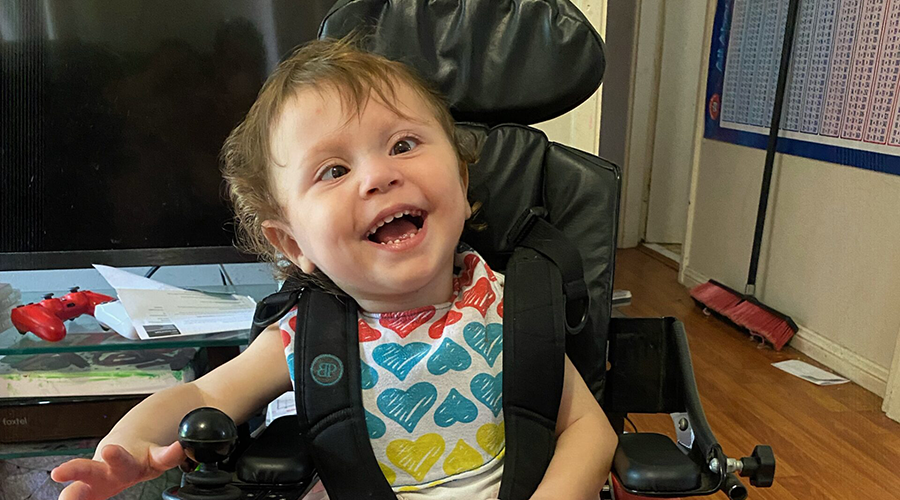
For children with CP, opportunities to explore may look different, but they are no less important.
Creating environments that encourage curiosity, exploration and problem solving helps children develop confidence while supporting both cognitive and motor development.
Rather than providing all the answers, clinicians and caregivers can encourage children to think, explore and discover for themselves.
The power of play
Play is one of the most powerful ways young children learn. Through play, children begin to understand:
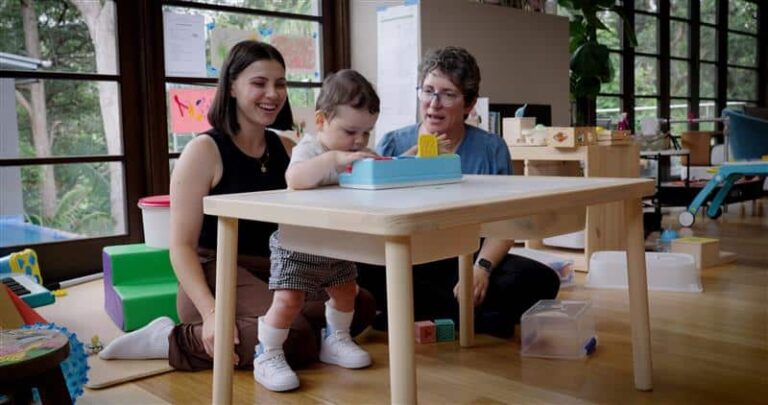
Whether it’s pressing a button to make a toy light up, stacking blocks, searching for a hidden object or exploring different textures, play provides repeated opportunities for learning in ways that are motivating and meaningful.
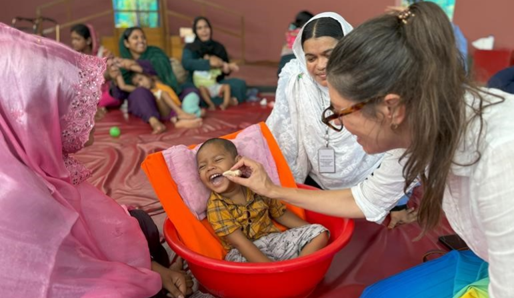
For children with CP, adapting toys, positioning or activities can help ensure they are active participants in play rather than passive observers.
Supporting clinicians to build cognitive skills
As our understanding of early brain development grows, so too does the importance of intentionally supporting cognition alongside movement and communication.
CPAdvance™ helps clinicians translate this evidence into practical strategies they can use every day.
Our Cognitive Training module explores how cognitive skills develop in infancy and provide practical approaches for embedding learning opportunities into everyday routines and play.
By combining evidence-based research with real-world clinical application, these modules give clinicians the confidence to support children’s thinking, learning and participation from the very beginning.
Every child deserves the opportunity to learn
Cognitive development begins at birth and continues through every interaction, experience and relationship.
For children with cerebral palsy, early intervention offers an incredible opportunity not only to support movement, but also to nurture curiosity, problem solving, communication and lifelong learning.
By helping families turn everyday moments into opportunities for discovery, clinicians can make a lasting difference to a child’s development.
Continue your learning
Discover practical, evidence-based strategies to support early thinking and learning through the CPAdvance™ Cognitive Training module.