Occupational therapy for children begins, and ends, with participation. It is about enabling children to do the everyday things that matter, playing, eating, dressing, learning, and belonging. As occupational therapists, our distinct contribution is not simply what we do with our hands, but how we shape the interaction between the child, their tasks, and the environments in which they live. It is this lens that must guide how we think about therapy intensity.
Recently, the conversation about “dose” has grown louder, and rightly so. We know the brain changes through experience. We know children require repetition. We know that children with disabilities require even more repetition. We know that successful practice matters. But somewhere along the way, a seductive simplification has crept in: that more therapy is always better.
It is not.
I am reminded of a mother I met early in my career. Her baby had just been identified as being at high risk of cerebral palsy. She sat across from me, holding her baby tightly, and said: “Please don’t tell me to wait and see. I can’t just watch and hope. Tell me what I can do to help.”
What she was asking for was not “more therapy.” She was asking for guidence. For clarity. For parenting action that would matter.
This is where our profession must be precise. The READ Model1 reminds us that effective therapy is not built on intensity alone, but on sound clinical reasoning. We begin with goals that matter to the child and family. We ensure those goals are realistic. We then select an intervention with proven effectiveness for that goal. Next, we determine how it should be delivered, the mode, and only then do we prescribe the dose required to achieve change.
Because dose without efficacy is meaningless.
Importantly, when the right intervention is selected, intensity does matter. Evidence-based approaches such as constraint-induced movement therapy (CIMT), bimanual training, and task-specific training, delivered at sufficient intensity, are highly effective and can drive meaningful functional gains2. And yet, in everyday practice, dose is often determined first, by service models, funding structures, and historical habits. “Standard care” is frequently defined as fortnightly or monthly clinic-based sessions, delivered regardless of the child’s goals, the intervention selected, or the evidence for effective intensity.
This is dose before the horse.
We have known for some time that increasing the intensity of ineffective approaches does not improve outcomes3. And yet, in parallel, a marketplace has emerged where “intensive therapy” is increasingly promoted to families, often those who are most vulnerable and most desperate to help their child. The word intensive sounds reassuring. It sounds scientific. It sounds hopeful. And it certainly sounds better than monthly clinic visits.
But “intensive” is an amount. It is not a guarantee of effectiveness.
Babies do not learn most from handling, putty, shaving cream, suits, brushing, swinging, cages, reflex inhibition, or weighted fabric.
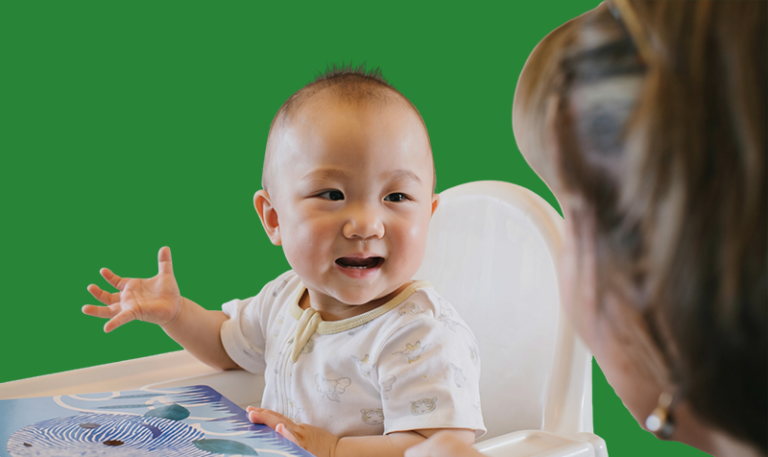
They learn through doing. Through relating. Through problem-solving. Through trying, failing, and trying something else. Through interaction with people they love, in environments that are safe and make sense to them, with objects that invite play.
They learn from their family. Their toys. Their everyday routines.
And this is where occupational therapy must hold its ground.
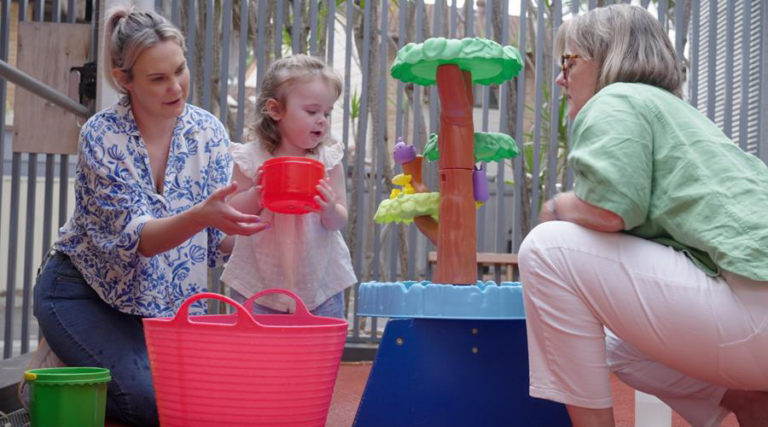
We are the profession that understands the power of the person–task–environment fit. We are the experts in adapting environments, coaching caregivers, and designing practice that is meaningful, motivating, and repeatable. We know how to turn ordinary moments into powerful learning opportunities. We know how to make intensity achievable, not by adding more clinic appointments, but by embedding practice into real-life contexts.
We cannot afford to undersell this.
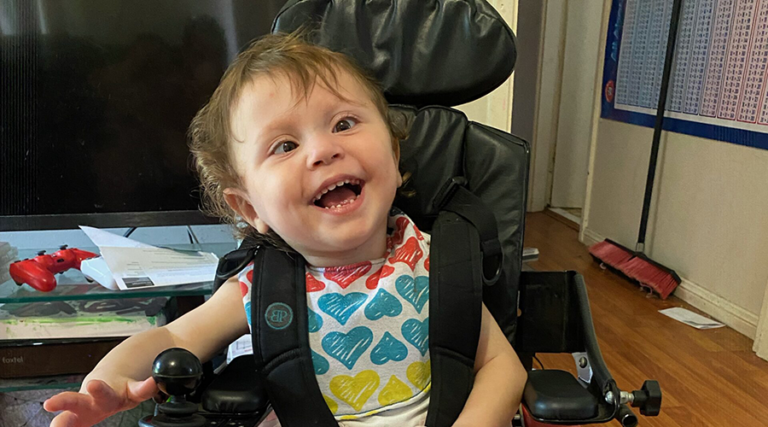
I think of an infant I met through a community-based service, one of many children growing up in a low socioeconomic context, where resources were limited, time was scarce, and stress was high. His family “failed to attend” frequent clinic sessions due to transport costs and competing caregiving responsibilities. On paper, his “dose” looked low.
But in reality, everything changed when we shifted the focus.
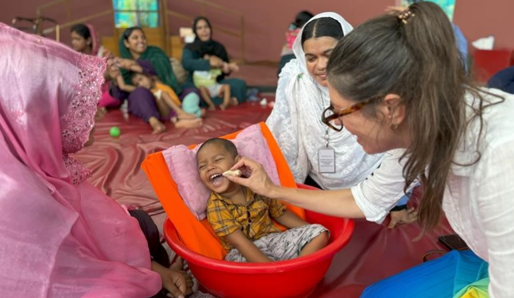
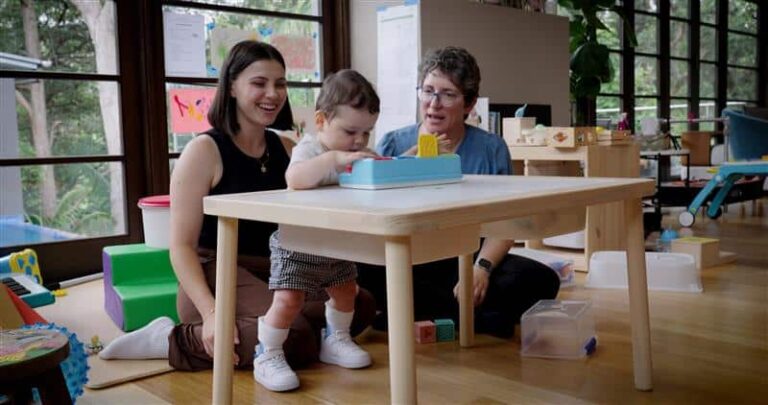
We worked with his caregivers and siblings to embed practice into everyday routines, into eating, dressing, and playing with objects already in the home. We adapted the environment so he could succeed. We problem-solved real-world solutions with the family, not out of context. We focused on what mattered.
When I returned for a home visit, his mother was on the floor with him, smiling as he reached, again and again, for a toy she skilfully passed him just out of reach. Each attempt slightly better than the last. Each success met with delight. The room was full of joy, but also something else, intensity. Not clinic-driven, hands-on intensity, but life-driven intensity.
This is what effective therapy looks like.
The evidence supports what we see in these moments. Children learn through repeated, meaningful practice in real contexts, and what happens at home with families is as important as, if not more important than, what happens in clinic-based sessions. Families are not passive recipients of therapy, they are expert caregivers and the primary drivers of dose, generalisation, and long-term success.
And now, we stand at an extraordinary moment in our field.
Occupational therapists have helped lead the global shift toward early, accurate detection of cerebral palsy4,5 and other developmental conditions. We are identifying infants diagnoses earlier than ever before. Which means we are no longer bound to a “wait and see” approach, we can act during the most powerful window of neuroplasticity.
But with this opportunity comes responsibility.
If we are to advance trajectories, we must also advance practice. We must ensure that the interventions we choose are evidence-based. That meaningful and realistic functional goals are set with families. That the mode of delivery supports real-world learning. And that the dose we prescribe is both sufficient and achievable.
This is where CPAdvanceTM bridges the gap between evidence and everyday practice. CPAdvanceTM is a state-of-the-art, evidence-based eLearning platform that equips occupational therapists and clinicians to deliver evidence-based early intervention for infants at risk of, or diagnosed with, cerebral palsy and other developmental conditions. Through video-rich content filmed in real home environments, it translates world-leading research into practical strategies that can be embedded into everyday life, accessible via flexible, self-paced learning, including during clinical downtime.
Because the future of occupational therapy is not about increasing clinic time.
It is about increasing impact.
It is about ensuring that when a mother says, “Don’t tell me to wait and see,” we can confidently respond, not solely with more appointments, but with a clear, evidence-based plan that she can carry into every moment of her child’s day.
And it is about recognising that sometimes, the most powerful therapy does not look like a clinic at all, it looks like a child reaching for a favourite toy, surrounded by people who know how to help them succeed.
That is our work.