Q: Amanda, what drew you to focus your research on feeding and swallowing in infants with cerebral palsy?
I was frustrated by the gap between what we know about early brain development and what we were actually doing in practice to help feeding. Traditionally the focus has been on modifying feeding to make it easier, without giving babies the opportunity to build the skills they need, and I wanted to change that.
Q: Your work on babiEAT reflects a shift in approach. What makes it different from traditional feeding therapy?
Dysphagia therapy typically focuses on making mealtimes safer in the moment, things like positioning, pacing, and thickening fluids, but those strategies don’t build the underlying skills babies need to feed safely without them. babiEAT is grounded in neuroplasticity and motor learning, so instead of modifying the task to make it easier, we’re actively shaping skill development over time.
Q: Why is early intervention so critical in this space?
Early on, the brain is incredibly adaptable and actively wiring itself based on the experiences it’s having, and equally, the ones it’s not having. If we can support feeding skills to improve during that window, we’re not trying to teach new patterns later, we’re building safe and efficient pathways from the beginning.
Q: How does CPAdvance support clinicians to apply this research in practice?
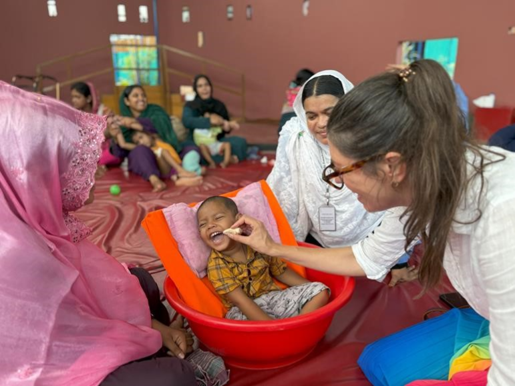
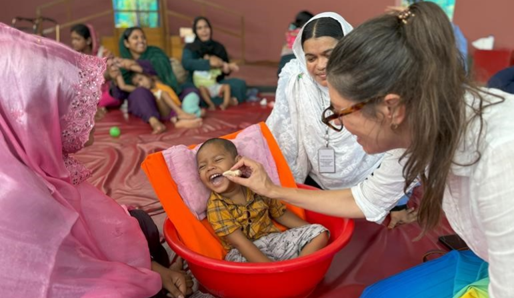
One of the biggest challenges clinicians face is knowing the evidence but not knowing how to translate it to the baby in front of them, and CPAdvance bridges that gap. It shows what evidence-based feeding therapy actually looks like with real babies and real families, then helps you put your clinical decision-making into practice with real case studies.
Q: What do you hope clinicians take away from CPAdvance?
Confidence, and a shift in thinking. When you understand how babies brains learn feeding skills and see it in practice, you feel equipped to move beyond just compensating for difficulties and start safely supporting real skill development. That’s what ultimately changes outcomes for children and families.
Through CPAdvance™, you’ll see exactly how this translates in practice — real clinicians working with real infants, progressing feeding skills session by session, and coaching families to embed therapy into everyday routines.
As Amanda explains:
“CPAdvance bridges that gap. It shows what evidence-based feeding therapy actually looks like with real babies and families, and helps you translate that into action.”
Reference
Khamis A. et al. (2019). Early intervention feeding therapy for infants with cerebral palsy.
https://pubmed.ncbi.nlm.nih.gov/31069491/